


A working smoke alarm gives you time to get out. Most fatal house fires happen where alarms are missing, flat, or not linked together, so one alarm sounding downstairs never wakes anyone upstairs. Interlinked alarms deal with that, and they’re the simplest way to protect your home. When one alarm goes off, they all go off, wherever you are in the building.
What the 2022 Scottish smoke alarm law requires
The law on smoke alarms has changed in Scotland. Since 1 February 2022, under the Housing (Scotland) Act, every home has to meet one standard, whether you own it or let it out. The Scottish fire safety regulations were raised after the Grenfell Tower fire, and they now apply to all Scottish homes. If your alarms are older battery units that aren’t linked, your home isn’t compliant.
To meet the new Scottish legislation, your home needs:
- a smoke alarm in the living room or the room you use most
- a smoke alarm in every hallway and landing
- a heat alarm in the kitchen
- all of those smoke and heat alarms interlinked, so they sound together
- a carbon monoxide alarm in any room with a boiler, fire, heater or flue
The smoke and heat alarms have to be ceiling-mounted and either mains-wired or fitted with a sealed, tamper-proof long-life battery. Carbon monoxide alarms are needed wherever you have a carbon-fuelled appliance, though they don’t have to be interlinked with the rest. Responsibility for all of it sits with the homeowner, or the landlord in a rented property.

Interlinked smoke alarm and heat alarm systems for your home
We handle smoke alarm installation across Glasgow, fitting compliant smoke, heat and carbon monoxide alarms, usually in a single visit. You don’t have to buy the alarms yourself or work out where they go. We supply the right alarms, fit them in the right places, and link them so your home meets the Scottish standard.
Where the alarms go
Getting the positions right matters as much as the alarms themselves. Smoke alarms go on the ceiling in the living room and every hallway and landing, a heat alarm goes in the kitchen where cooking fumes would trip a smoke alarm, and a carbon monoxide detector goes near any carbon-fuelled appliance. We site each one to the manufacturer’s spacing and the Scottish guidance, so your smoke detectors give proper coverage without nuisance false alarms.
Mains-wired or long-life battery
Both are allowed under the Scottish rules, and we fit whichever suits your home. Mains-wired alarms run off your electrics with a battery backup, and they suit a larger home or a full rewire. Long-life battery alarms are wireless interlinked smoke alarms: a sealed ten-year cell that links by radio, so they go in quickly with no cabling or redecoration. If you’re not sure which is right, we’ll talk it through when we quote.
Carbon monoxide alarms
Carbon monoxide is a separate risk from fire, so it needs its own detector. If you have a boiler, gas fire, wood burner or any other carbon-fuelled appliance, you need a carbon monoxide alarm (CO alarm) in that room. Unlike your smoke and heat alarms, CO alarms and carbon monoxide detectors don’t have to be interlinked, but they do have to be there for the home to be compliant. We fit them alongside your alarms, so you have adequate carbon monoxide protection from the same visit.

Interlinked fire alarm systems for businesses
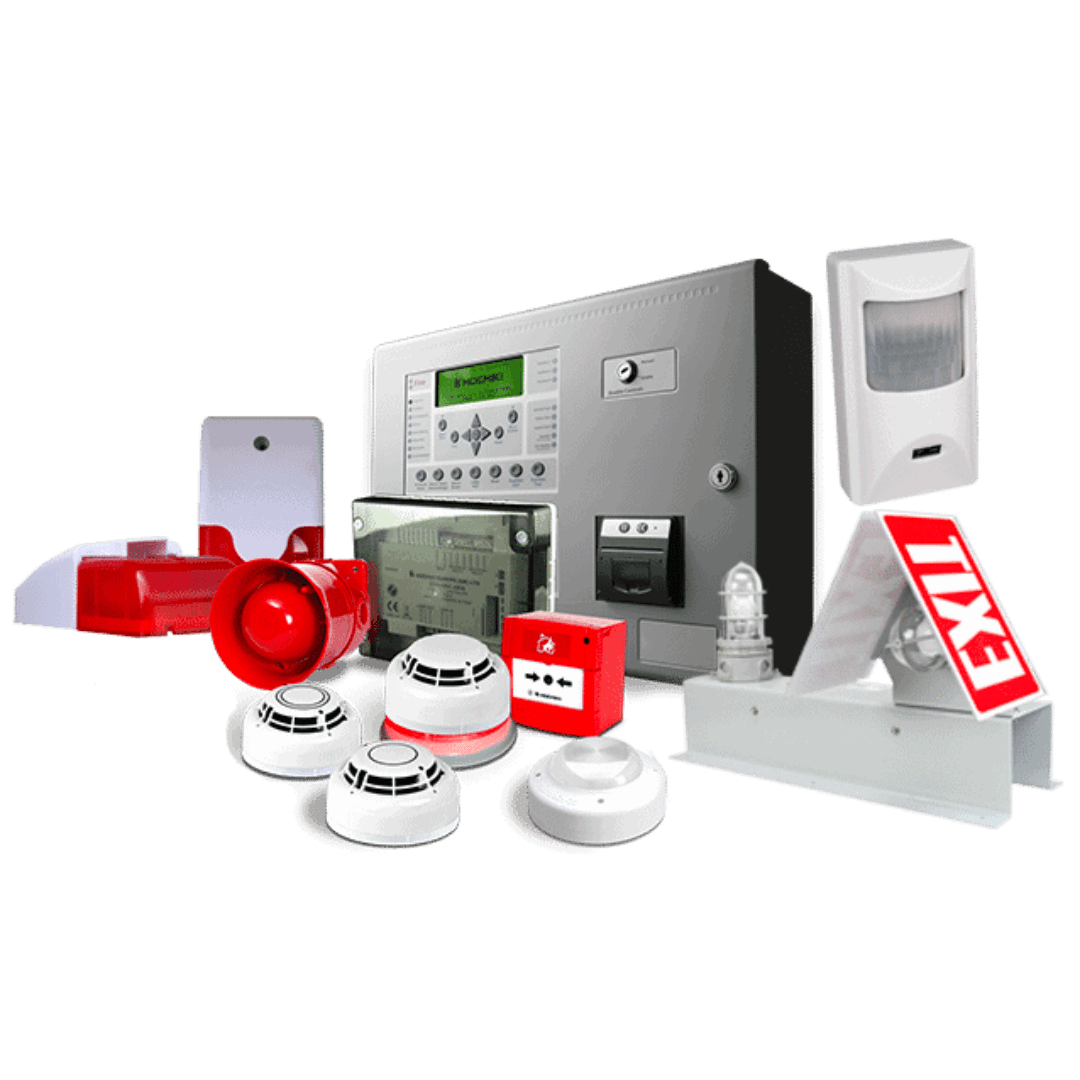
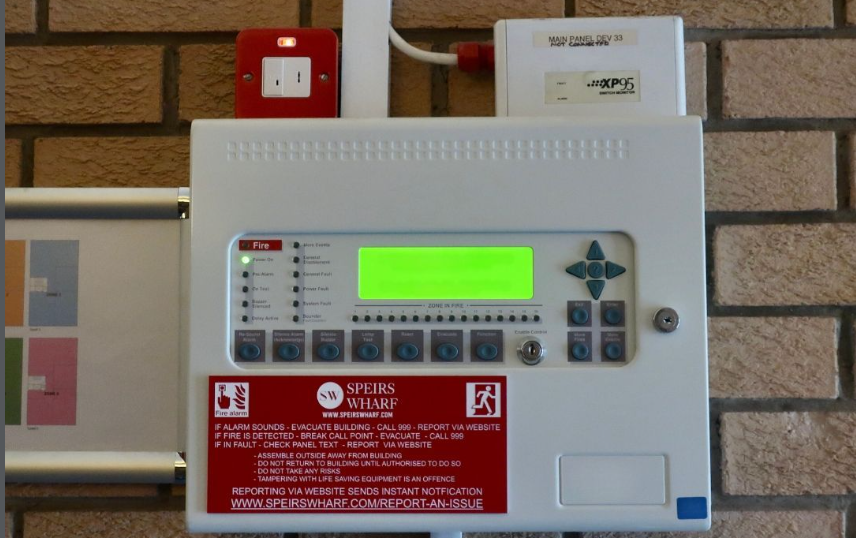
Businesses carry a separate duty. If you run commercial premises, you need a fire alarm system that suits the building and its risk, usually identified by a fire risk assessment. We design, install and maintain commercial fire detection systems across Glasgow and Scotland, from a single shop to a multi-zone site.
Depending on the building, that might be a conventional panel for a smaller unit, or an addressable system that pinpoints exactly which detector has triggered in a larger one. Either way it’s a single interlinked fire alarm, wired so a trigger anywhere sets off the alarm everywhere. Wireless options suit listed buildings and places you can’t run cable. Whatever goes in, we commission it, certificate it, and can connect it to monitoring so an alarm gets a response day or night.
Why choose Central FS as your alarm installers in Glasgow
We’re a fire, security and electrical contractor, so the same team that fits your alarms can handle the wiring, your fuse board, or a fire risk assessment if you need one. For mains-wired work that counts, because your alarms tie straight into your electrical system and get done properly first time. Faulty electrical appliances and wiring cause a large share of electrical fires in the home, so our full range of electrical services means we can deal with the cause as well as fit the alarm.
As a BAFE accredited company, our fire safety work is independently audited, and we don’t disappear once the alarms are up. We handle installation and aftercare, show you how to test and silence the alarms, and sort out any false alarms or chirping rather than leaving you to it.
Servicing and keeping your alarms working
An alarm only protects you while it’s working, so alarms need testing and the occasional service. For homes, we’ll show you how to test your alarms and what the different beeps mean. For a commercial fire alarm system, regular servicing is a requirement that keeps the building compliant and your insurance valid.
Most false alarms come down to dust, ageing units, or a detector in the wrong spot, and they’re worth sorting quickly, because an alarm that keeps going off for no reason often ends up disconnected. We service alarms we’ve fitted and alarms we haven’t, so if your existing system keeps triggering or a smoke alarm won’t settle, we can find out why and put it right.
Across Glasgow, the Central Belt and throughout Scotland
We install fire and smoke alarms across Glasgow and the wider Central Belt, and we cover the rest of Scotland from our Glasgow head office and our Perth base. Wherever you are, if you’re not sure your alarms are compliant, we’ll tell you what you actually need rather than sell you more than you do.
How installation works
- Free quotation. Tell us about your property and we’ll price the job, with no obligation.
- Design. For a home we plan the alarm positions to the Scottish standard. For a business we design the fire detection system around the building and its risk.
- Installation. Installing smoke, heat and carbon monoxide alarms is usually a single visit, and we fit and interlink them tidily.
- Test and certificate. We test everything, show you how it works, and give you a certificate that proves your alarms are compliant.
- Aftercare. We’re a phone call away for servicing, faults or false alarms.
Fire alarm installation questions answered
How much does fire alarm installation cost?
It depends on how many alarms you need and whether they’re mains-wired or long-life battery. A standard interlinked home setup is a quick, fixed-price job, while a commercial fire alarm system is priced to the building. We give you a free quotation before any work starts, so call 0141 530 1244 for a price.
Do smoke alarms need to be hardwired in Scotland?
No. The Scottish rules accept either mains-wired alarms or sealed, tamper-proof long-life battery alarms, as long as they’re interlinked and correctly sited. Battery alarms that link by radio are a common choice because they meet the standard without any rewiring.
Do I need an electrician to fit a smoke alarm?
For a sealed long-life battery alarm, no, though siting and interlinking them correctly is where people go wrong, so it’s worth having them fitted properly. For mains-wired alarms you do need a qualified electrician, because they connect into your electrical distribution board. We handle both.
Will the fire brigade install fire alarms?
The Scottish Fire and Rescue Service offers free home fire safety visits and advice, but they don’t fit the full interlinked system the law now requires. For that you need an installer. We fit compliant smoke, heat and carbon monoxide alarms across Glasgow and Scotland.
Why does my smoke alarm keep chirping?
An occasional chirp is usually a low battery, or on a sealed unit, a sign the alarm has reached the end of its ten-year life and needs replacing. It can also be dust, or the alarm sitting too close to a kitchen or bathroom. If a new battery doesn’t settle it, the unit itself is likely due for renewal, and we can swap it while we’re there.
How long do smoke alarms last?
Most smoke alarms need replacing about every ten years, and long-life battery units are sealed to last roughly that long before the whole alarm is changed. If a smoke alarm keeps chirping, it’s usually telling you the battery or the unit has reached the end of its life.
Book your fire alarm installation
To get compliant fire and smoke alarms fitted in Glasgow or anywhere across Central Scotland, call our Glasgow office on 0141 530 1244 or Perth on 01738 500006. You can also request a free quotation, and we’ll sort out interlinked alarms that meet the 2022 Scottish law, or get a commercial fire alarm system installed and built around your premises.