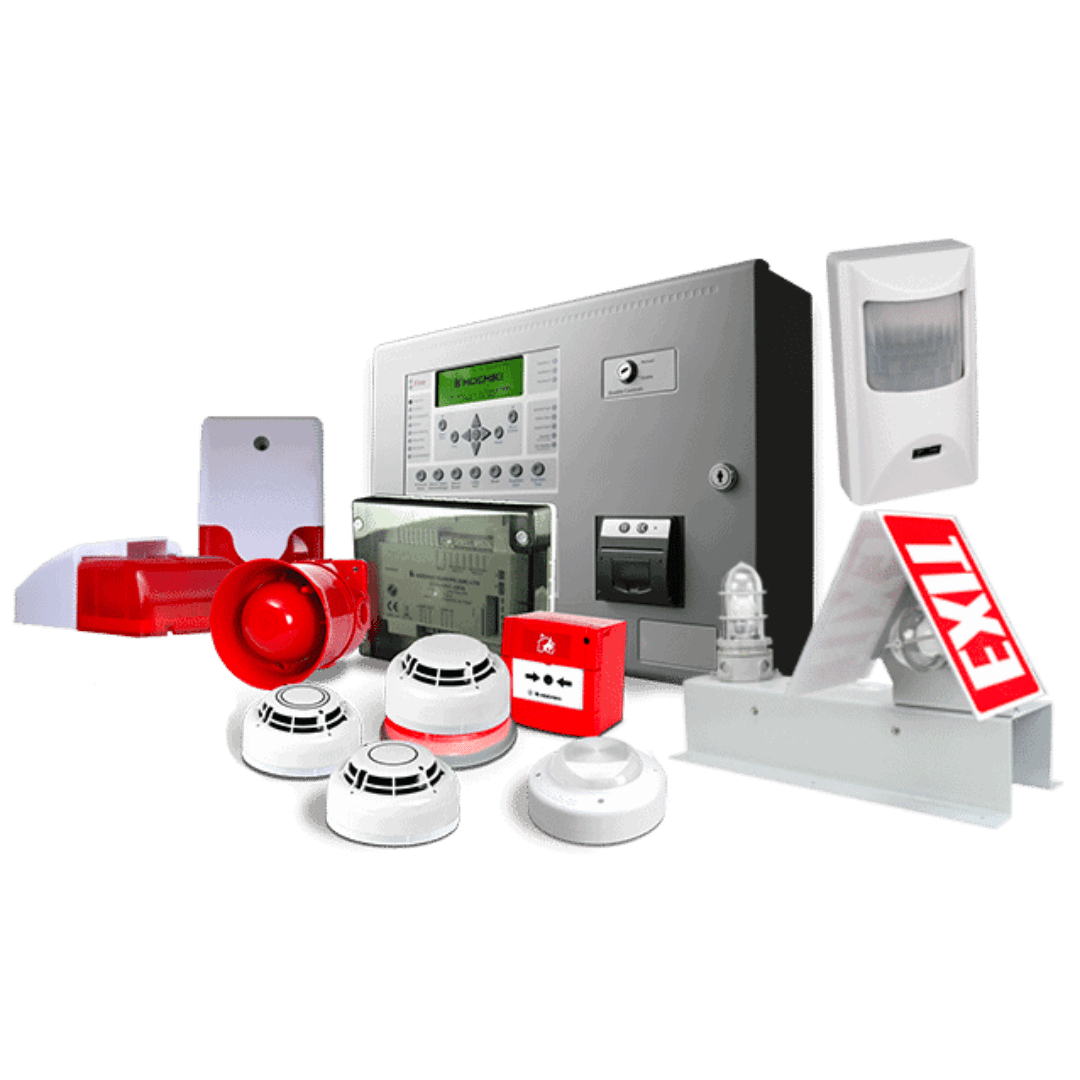
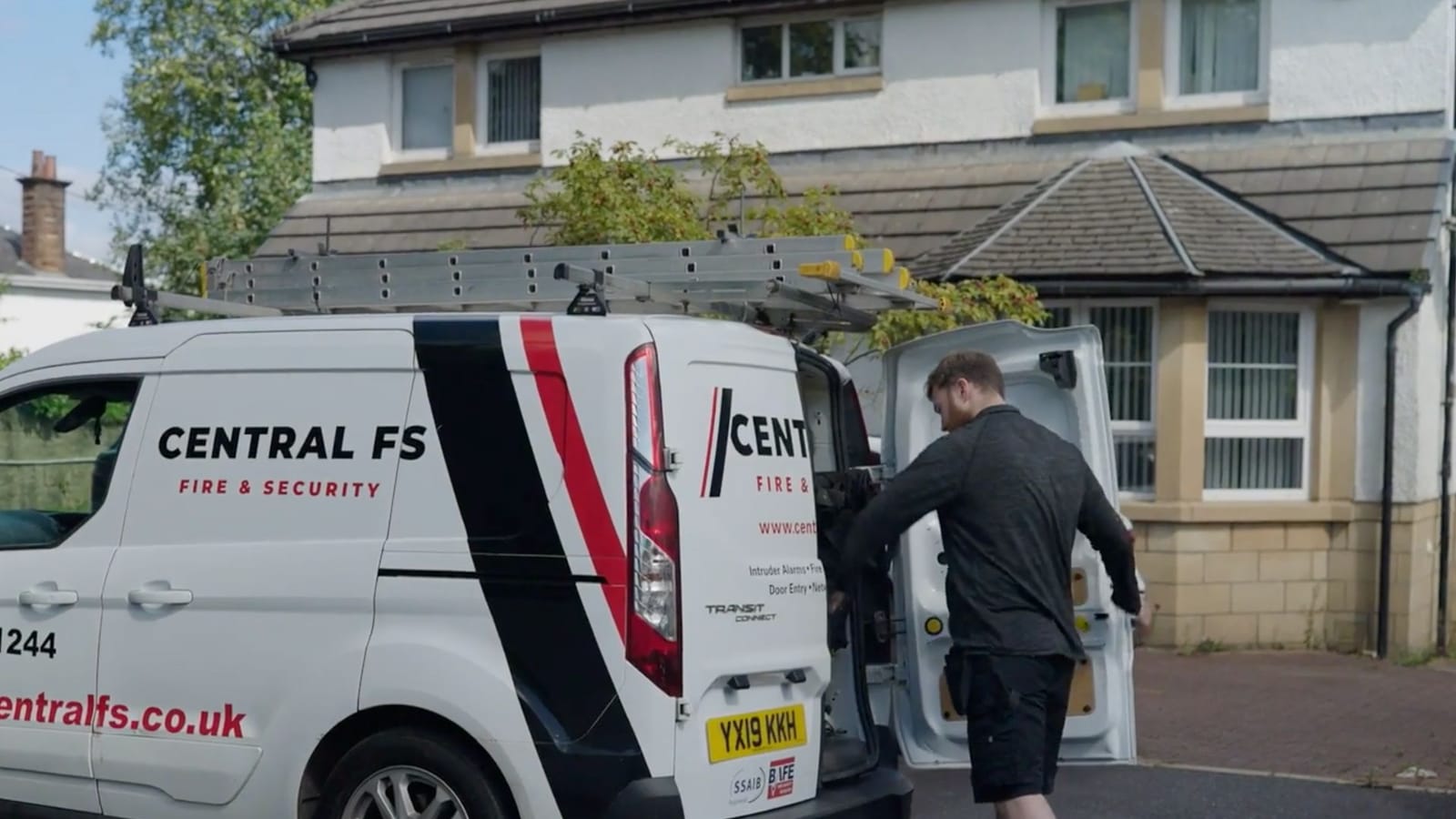





When it comes to fire, security and electrical work, the organisations that matter check and sign off the work we do. That is how you can be sure the work is completed correctly and formally approved.
When you’re choosing equipment, professional advice helps you find options that cover the accessible parts of your home and give you a practical way to deal with an alarm activation.
Planning the right security system for your home
A security survey looks at both how someone could get into the property and the way the household will use the equipment. The location of an accessible window, an adjoining roof or an entrance at the back can affect the design as much as the number of rooms.
As part of our conversation, we also talk through anything about the current setup that concerns you. Your requirements might include an alarm installation in a previously unprotected home, improved coverage following an extension, or a way to check an entrance while you’re away. We use these needs to help determine what equipment is worth putting in the quotation.
The appropriate set-up ought to be straightforward to manage for everyone who has to operate it. If an alarm is awkward to set, or cameras generate repeated unwanted notifications, the household can be discouraged from using the protection they’ve paid for.
Flats and shared tenement entrances
Although a functioning communal entrance provides some control over access to a tenement, the flat still requires its own protection. In addition to the flat’s entrance door, the survey considers any accessible windows, including those reached via a communal back court.
The people responsible for a common entrance need to be consulted on access control that affects its door. Camera positions require care where visitors and residents use the same close, and we can advise on the door entry equipment.
Houses, extensions and detached garages
A rear extension or a detached garage may leave a house needing detection beyond its main hallway. Door contact sensors are able to detect an opening on the boundary of a protected area, while motion detectors cover suitable internal spaces.
The distance involved, the way the walls are built and the available power supply affect equipment within an outbuilding. We consider both these conditions and the specific requirements of anyone who routinely uses the garage before recommending a camera or sensor. Setting arrangements for a home office might need to be different from those for a tool store.
House alarms and intrusion detection
A house alarm’s settings determine how its control panel responds to activity reported by detection devices. Door and window contacts register the opening of doors and windows, and an internal motion detector detects movement within its coverage area.
Detector placement needs to take account of day-to-day movement and potential intrusion. Where a detector should be placed and which detector to choose can both be affected by pets, sources of heat and the layout of furniture. If detector locations haven’t been properly considered, unwanted activations may become more frequent as a result of merely adding more detectors.
The points of entry and areas that need protection shape our designs for burglar alarms in Summertown homes. Secure doors, window locks and gates are still required, even though visible external equipment can help discourage an attempted intrusion.
Wired and wireless alarm systems
With wireless intruder alarms, there’s no need to lay detector cables through every room, which can be useful in a finished house. It is still necessary for the radio signal to get to the control panel reliably, especially through thick masonry or between the house and an outbuilding.
A home with appropriate wiring already in place, or renovation work with already accessible cable routes, could be suited to a wired alarm system. The possibility of reusing that wiring depends on its state and compatibility with the intended devices.
Both types of alarm system, wireless and wired, can include battery backup. Checking the power supply arrangement and the condition of the batteries should form part of the design and servicing, as these determine what keeps working during an interruption.
Using the alarm while you’re at home
Part-setting allows selected areas to stay protected while people spend time in other rooms. For example, an appropriate system design can offer overnight protection for downstairs entrances without normal movement triggering a bedroom detector.
The alarm settings must leave anyone moving through the home with a route they can use. As part of handover, we’ll take you through how to set and unset the agreed areas, including which doors or detectors stay active. Anyone operating the alarm should understand both the entry delay and how to cancel an unintended activation.
CCTV cameras and useful night-time footage
Deciding where cameras go starts with the detail you have to see. A camera taking in a broad view of the garden could show movement without recording a clear picture at the back door. Distance, together with the angle of view, influences whether video recordings are useful for reviewing an event later.
Central FS’s CCTV installation service in Summertown covers home camera systems with recording and remote viewing options. We take account of the lighting available, as well as entry points, driveways and access routes, to determine where equipment should be placed.
Infrared night vision helps a camera to record in darkness, although reflections and things blocking the view may lower the image quality. A badly aimed floodlight, a nearby wall or vegetation may disrupt the view. For areas where the camera coverage would be improved by security lighting, our team can fit it.
Camera views at shared boundaries
Only what is required for the security objective ought to be captured by a camera used for home security. A change to the camera angle might be needed to restrict recording of neighbouring homes and communal space in a shared back court or close.
For an explanation of the responsibilities that may apply where a system records outside the boundary of the homeowner’s property, see the ICO’s home CCTV guidance. We ought to consider camera placement, privacy masking and decisions on storing footage before recording starts.
Alarm monitoring and police response
For people signed up to be alerted, a system with app alerts can provide notifications, while an audible alarm draws attention in the local area. A self-managed setup means the people concerned must review the notification and decide what action to take.
Alarm monitoring through a 24/7 alarm receiving centre is also something we offer. Staff handle signals in line with the agreed response arrangements, which can include getting in touch with nominated keyholders. Maintenance and monitoring are distinct parts of the service, and so the quote should clearly identify which cover is included.
An eligible system is necessary for police response, along with arrangements that conform to Police Scotland’s current security systems policy. An alert received on a phone does not establish the eligibility in question. We will talk with you about the available response options when we specify the intruder alarm and monitoring service.
App control and communication backup
Using remote control, you can check the alarm’s status or view a camera while away from the premises. We explain what the suggested system supports before you decide, as its available functions depend on the hardware, app and connection.
For alarm operation, local recording and remote access, the power and communication paths used can vary from one another. A powered recorder keeps saving video footage even if a broadband fault disrupts an app connection. Where ongoing remote signalling is necessary, the system design should take account of an appropriate backup connection.
Bringing alarms and CCTV together also needs compatible hardware. We’ll make assessing integration options, including whether controls can share an app or require separate access, part of preparing for the work.
Accredited home security solutions from Central FS
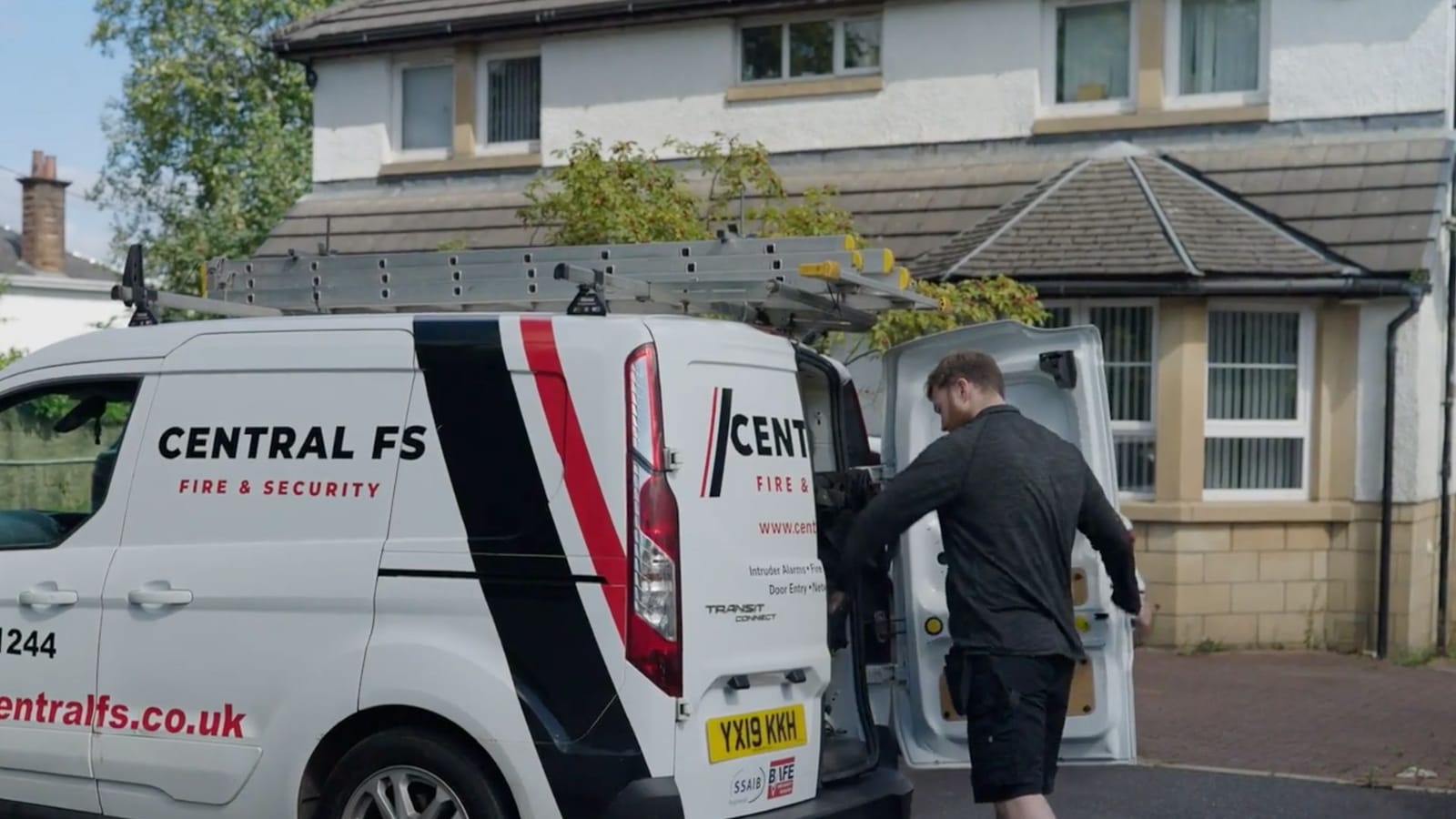
SSAIB has given approval to our business to deliver security services. SSAIB, the Security Systems and Alarms Inspection Board, provides independent assessment of approved installers, which means customers can confirm the credentials of an installer before committing to a system.
Our security services include installation and ongoing maintenance, with experienced engineers who can explain the proposed equipment in straightforward terms. You can discuss a fault or planned change with us as the company responsible for installing the system, which helps keep the installation records and later work together.
Fire, security and electrical work
We also do fire and electrical work, which means you can discuss further needs with a single company. Being able to do that can be helpful during refurbishment work if an outdoor electrical supply, a fire alarm or security equipment needs attention alongside other work.
For fire-related work, we hold BAFE accreditation, whereas our SSAIB approval covers security work.
How our home security installation works
Surveying the property
Let us know what your property is like, what equipment is already in place and which areas you want to cover. When we examine the home, we also discuss how you intend to use the system, including whether you would like monitoring. Settling on a model or detector count isn’t required before you talk to us.
Design and quotation
We use the survey to propose security measures, and we also provide a no-obligation quote. The specification should provide details of the security equipment, installation work and any ongoing services, to enable you to weigh up the proposed coverage against your budget before booking the job.
Fitting and testing
The engineers on our team fit the agreed equipment and carry out tests on its detection and recording functions. Work that includes remote access or monitoring also calls for the connections to be tested. Cable routes and mounting points are agreed taking into account the property and the access required for future servicing.
Handover and everyday operation
Besides showing you the system controls, we set out how to respond to fault notifications or an alarm triggered by accident. For cameras, that also covers how to make use of the remote viewing functions made available and find a recording. The handover should leave you understanding which services your contract covers and who to contact for help.
Maintenance and support after fitting
The detectors, batteries and signalling arrangements can be examined as part of servicing before a fault goes unnoticed. Building work that alters an access route or growing vegetation can also change a camera’s view, even when the camera itself continues to operate.
We offer support for maintenance and repairs, and can evaluate an upgrade when your security requirements shift. Bringing along details of any equipment already fitted helps us in establishing whether components can be kept. Our customer service also includes setting out the current setup’s limitations before we recommend further work.
Home security systems in Summertown
We cover homes throughout Summertown in Govan, including properties along Paisley Road West, around the Helen Street junction and around Elizabeth Street Park and Ibroxholm gardens. Our coverage takes in the area’s tenement and purpose-built flats, as well as converted flats and terraced houses.
For a property in Summertown, contact our Glasgow head office at Kinning Park on 0141 530 1244 or email info@centralfs.co.uk. When you enquire, please give us your postcode and a description of the property so we can discuss the work at your address in the G51 district.
Our coverage also extends beyond Summertown into nearby areas, with separate pages for Moorpark and Govan. You can reach us through the same Glasgow office for properties elsewhere across the city, including homes over the boundary in Ibrox, Cessnock, Kinning Park, Linthouse, Dumbreck and Bellahouston.
Home security questions from Summertown homeowners
How much does a home security system cost?
The amount you pay depends on cabling routes, the detection and camera coverage needed and the condition of any equipment being retained. The overall cost also varies according to monitoring together with other ongoing services. We provide a quotation for the work your property needs, and it is free of charge and without obligation.
Can you upgrade an existing alarm or camera system?
Where there’s an existing installation, we can review it and set out the options. It may be possible to reuse compatible equipment or serviceable wiring, but an older panel can restrict the available functions. With information about the make, model and any current faults, we can more easily work out what requires checking.
Will pets trigger an intruder alarm?
Although the effectiveness of detectors suitable for pets depends upon the animal, room layout and detector position, they can reduce unwanted activations. If you tell us about your pets during the survey, we can consider both the detection settings and the parts of the property they need to be able to access while the alarm is armed.
How long does fitting take?
Installing a combined set-up requiring new cables and several camera positions involves different work from installing a wireless alarm in a finished home. We cover any access or preparation needed before the installation starts when going over the expected duration, after the specification is agreed.
Is out-of-hours engineer support available?
Customers holding maintenance contracts can use our on-call assistance 24/7. Refer to your agreement’s terms to check what support is included and how to ask for it. Monitoring through an alarm receiving centre, which has response arrangements of its own, is a separate service.
Arrange a home security quote for your Summertown property
Call Central FS on 0141 530 1244 or request your home security quote if your Summertown property needs a new alarm, better camera coverage or a review of older security equipment. We’ll discuss the property and the protection you want, with a free quote and no obligation to proceed.