




The bodies that matter for fire, security and electrical check our work and approve it. That is how you can be sure the job is carried out correctly and formally approved.
Choosing security equipment that gives you a practical way to respond to an activation and covers the accessible areas of your home is easier with professional guidance.
Planning the right security system for your home
A security survey looks at how the household will use the equipment and how someone could enter the property. The location of an accessible window, an adjoining roof or an entrance at the back can affect the system design as much as the number of rooms.
We also talk through what worries you about the present setup. An alarm installation in a previously unprotected home, improved coverage after an extension, or a way to check an entrance while you’re away may be what you need. These requirements help determine the equipment worth putting in the quotation.
For everyone who needs to use it, the appropriate system ought to be manageable. If an alarm is awkward to set, or cameras generate repeated unwelcome alerts, the household can be discouraged from making use of the protection they’ve purchased.
Flats and shared tenement entrances
Even with a functioning communal entrance providing some control over access to the tenement, the flat still requires its own security. During the survey, we look at the flat’s entrance door along with any accessible windows, including those reached via a shared back court.
Access control that affects a shared door must be discussed with the people responsible for that entrance. Care is required in placing cameras where residents and visitors use the same close, while we can give advice on the door entry equipment.
Houses, extensions and detached garages
Detection beyond the main hallway might be required in a home with an extension at the back or a detached garage. Door contacts are able to detect an opening at the edge of a protected area, whereas movement detectors cover appropriate internal spaces.
The available power supply, together with distance and the way the walls are built, has an effect on devices in an outbuilding. Alongside those conditions, we consider the specific requirements of anyone who regularly uses the garage before recommending a sensor or camera. Ways of setting the system for a home office may need to be different from those for a tool storage area.
House alarms and intrusion detection
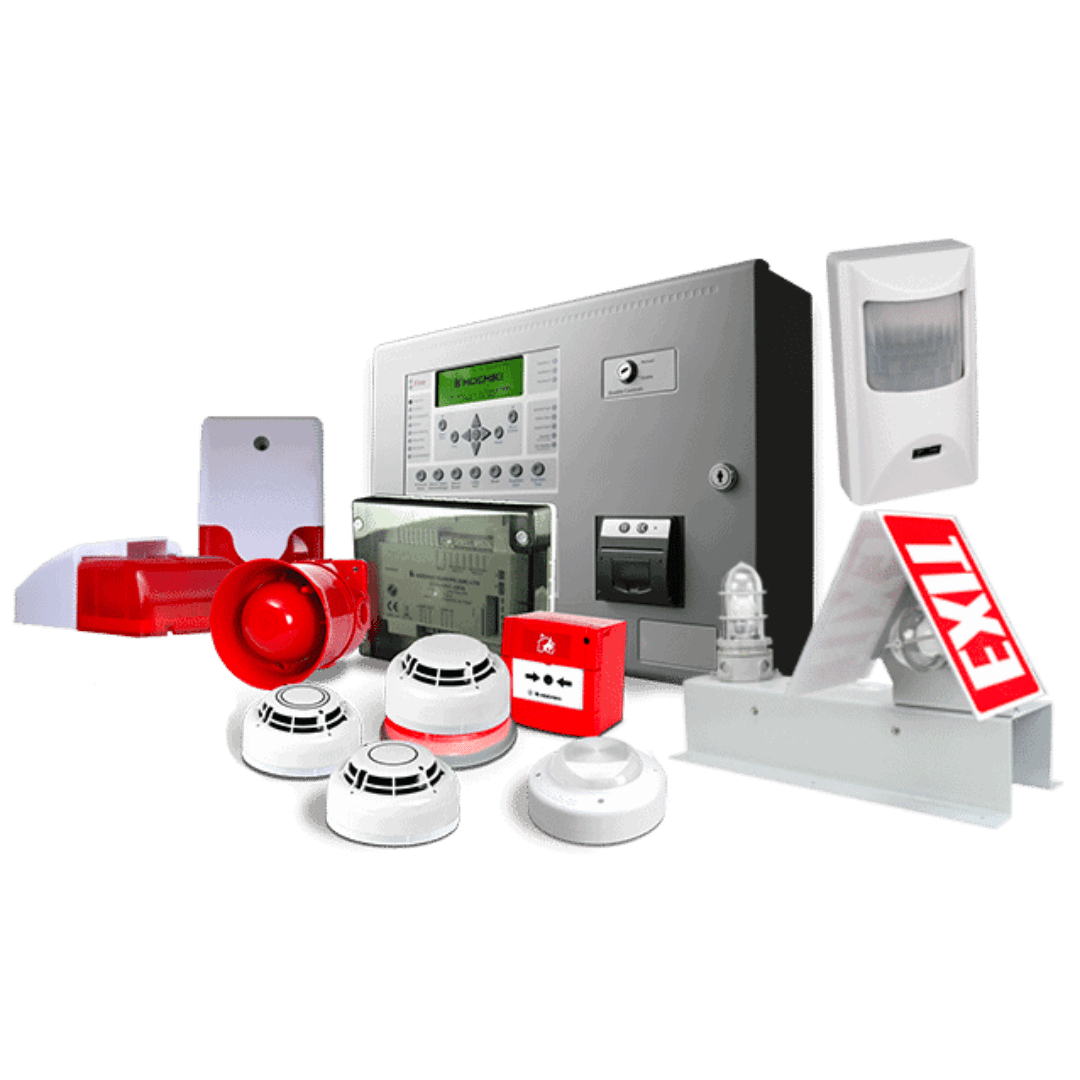
A house alarm’s control panel receives reports of activity from detectors and reacts in line with how the system has been set. Door and window contacts register opening, and an internal motion detector detects movement within its area of coverage.
Choosing where to locate detectors means taking account of daily activity and potential intrusion. Where a detector should be placed and the choice of detector can both be influenced by pets, sources of heat and the layout of furniture. More unwanted activations may result from merely adding extra detectors if their positions haven’t been properly considered.
To design burglar alarms for homes in Drumchapel, we use the entry points and areas needing protection as our starting point. The presence of visible external equipment can help deter an attempted intrusion, yet there’s still a need for secure doors, window locks and gates.
Wired and wireless alarm systems
Wireless intruder alarms avoid the need to route cables for the detectors through every room, so they can be helpful in a finished home. The panel must still receive the radio signal reliably, especially through thick masonry or between the house and an outbuilding.
Where cable routes are already accessible during renovation work, or a home has suitable wiring already in place, a wired alarm system may be appropriate. The possibility of reusing that wiring is dependent on its condition and compatibility with the proposed equipment.
It’s possible for wireless and wired alarm installations alike to include battery backup. As part of the design and servicing, the power arrangement and the condition of the batteries ought to be examined, since they determine what continues to work during an interruption.
Using the alarm while you’re at home
Chosen parts of the home can stay protected through part-setting while people spend time in other rooms. Overnight, for example, a suitable design can keep downstairs entrances protected without a bedroom detector reacting to normal movement.
When the settings are in effect, everyone moving around the house must have a usable route. We’ll explain how to arm and disarm the agreed areas at handover, including which doors or detectors remain active. Anyone using the alarm should understand both the entry delay and how to cancel an unintended activation.
CCTV cameras and useful night-time footage
The first consideration when siting cameras is the detail you have to be able to see. Movement might be seen in a wide view of the garden without a clear picture being recorded at the back door. The angle of view and viewing distance affect whether recordings are useful for reviewing an event later.
Domestic camera systems with options for recording and remote viewing are covered by Central FS’s CCTV installation service in Drumchapel. Our choices about where equipment should be positioned take into account entrances, driveways and access routes, along with the lighting available.
Although infrared night vision helps a camera to record in darkness, reflections and things blocking the view may lower the picture quality. Things that may disrupt the view include a wall close by, plant growth and a poorly directed floodlight. Our team can add security lighting where the coverage the cameras provide would benefit from it.
Camera views at shared boundaries
The footage from a camera used for home security ought to include only what is needed for the security objective. A change to the camera angle might be required to restrict recording of neighbouring homes and communal space in a shared back court or close.
The responsibilities that can apply when a system records outside the homeowner’s boundary are set out in the ICO’s home CCTV guidance. We should think through camera placement, privacy masking and decisions about footage storage before recording starts.
Alarm monitoring and police response
Through an app-enabled system, notifications can reach people registered to receive alerts, and an alarm with an audible alert attracts attention in the surrounding area. With a self-managed setup, the people concerned need to review the notification and determine how to act.
Our services also include alarm monitoring through a 24/7 alarm receiving centre. Members of staff act in accordance with the agreed response arrangements when dealing with alarm signals, and those arrangements may include getting in touch with designated keyholders. Maintenance and monitoring are distinct elements of the service, and therefore the quote should make clear what cover is included.
An eligible system is required for police response, alongside arrangements that comply with Police Scotland’s current security systems policy. The fact that an alert reaches a phone does not prove that eligibility. When we specify the intruder alarm and monitoring service, we will go through the available response options with you.
App control and communication backup
Using remote control can let you see the alarm’s current state or view a camera’s feed without being at the premises. The available features depend on the equipment, app and connection, so we set out what the proposed system supports before you decide.
Local recording, remote access and alarm operation may each make use of different power and communication paths. An app connection could be disrupted by a fault affecting the broadband even as a powered recorder continues to save video footage. The design should account for a suitable backup connection if remote signalling is required to continue.
You also require compatible equipment if alarms and CCTV are to be connected. Reviewing options for integration, including whether controls can use the same app or require separate access, will form part of our preparation for the work.
Accredited home security solutions from Central FS
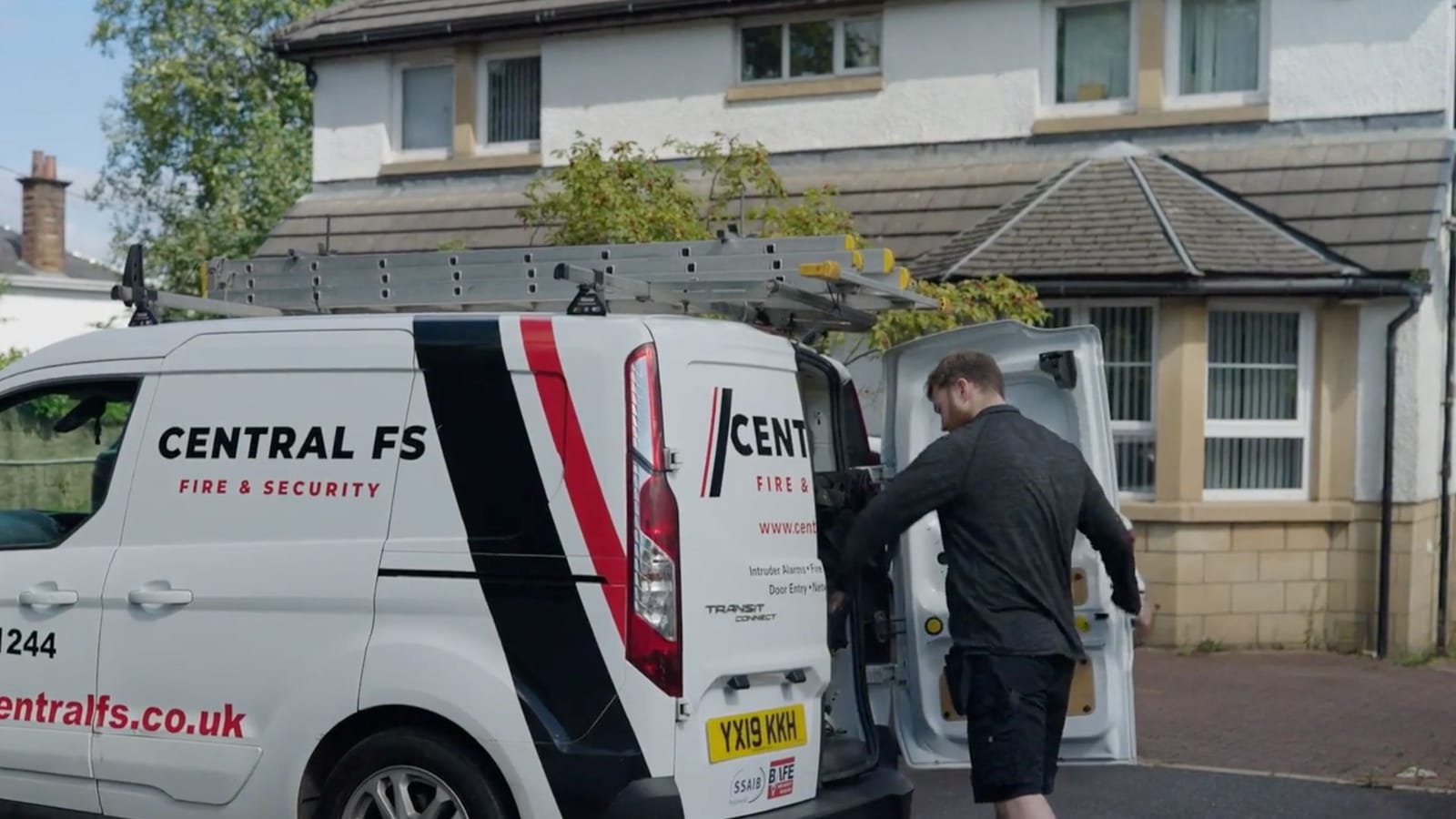
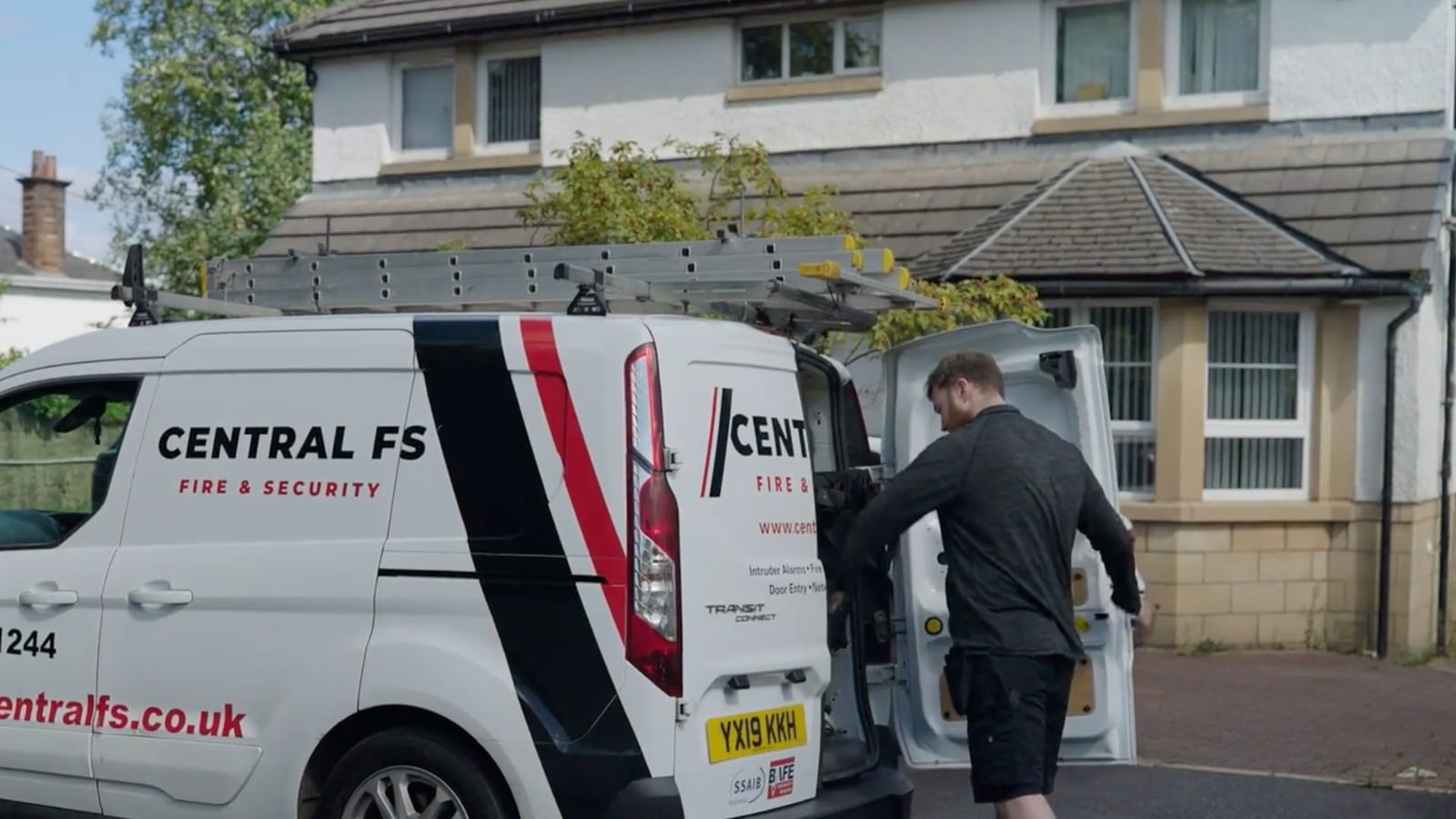
We are a company holding SSAIB approval for our security services. Before committing to a system, clients are able to verify an installer’s credentials through the independent assessment of approved installers carried out by SSAIB, the Security Systems and Alarms Inspection Board.
We offer installation and ongoing maintenance as part of our security services, with experienced engineers who can explain the proposed equipment in simple terms. As we’re the company responsible for fitting the system, you can talk through a fault or planned change with us, and doing so helps keep the installation records and subsequent work together.
Fire, security and electrical work
We also carry out fire and electrical work, so additional requirements can be talked through with one firm. When an outdoor electrical supply, a fire alarm or security equipment requires attention alongside other work during a refurbishment, being able to talk through these requirements with one company can be helpful.
Our BAFE accreditation applies to fire work, and SSAIB approval relates to security work.
How our home security installation works
Surveying the property
Let us know about the areas you want to cover, together with details of your home and the equipment currently in place. When we assess the home, we also talk about how you plan to use the system, including whether you would like monitoring. Settling on a model or number of detectors isn’t required before you talk with us.
Design and quotation
We recommend security measures on the basis of the survey and supply a no-obligation quotation. The specification document ought to include details of the security equipment, installation work and any ongoing services, to enable you to compare the proposed coverage against your budget before arranging the job.
Fitting and testing
Our engineers’ work includes fitting the equipment we’ve agreed on and carrying out tests on its detection and recording functions. If remote access or monitoring forms part of the scope of work, the connections also need to be tested. When cable routes and mounting points are agreed upon, the property is considered, including access needed for future servicing.
Handover and everyday operation
We describe how to deal with fault messages or an alarm set off accidentally, as well as showing you the controls. Locating a recording is part of what we cover in the case of cameras, as is making use of the remote viewing functions made available. Once the handover is complete, you should know which services your contract covers and who to contact for support.
Maintenance and support after fitting
During servicing, we can check the detectors, batteries and signalling setup before an issue escapes notice. Building work that alters an access route or vegetation growth can also change a camera’s view, even if the camera itself continues to operate.
Our support includes maintenance and repairs, and we can evaluate an upgrade when your security needs shift. Details you bring along about any current equipment make it easier for us to establish whether parts can be retained. Customer service also means explaining the current system’s limits before we recommend extra work.
Home security systems in Drumchapel
We cover Drumchapel within Glasgow City’s G15 postcode district, including its terraced and semi-detached houses. Our coverage also extends over the boundary into Drumry and Blairdardie, as well as Linnvale, Kilbowie and Whitecrook, so you can contact us for a property in Drumchapel itself or in these neighbouring districts.
For enquiries from Drumchapel, contact our Glasgow head office in Kinning Park on 0141 530 1244. You can also reach us by email at info@centralfs.co.uk, and we ask you to include your postcode and a description of the property when you get in touch about work in the area.
Our nearby coverage includes Hardgate and Yoker, each with a separate page, so when contacting us about a home near Drumchapel’s boundary, give us the property’s postcode and a description of it by phone or email so we can discuss the work at that address.
Home security questions from Drumchapel homeowners
How much does a home security system cost?
The price is affected by the state of any equipment being kept, cabling routes and the detection and camera coverage needed. Along with monitoring, additional ongoing services also affect the overall cost. We give you a quotation for the work your home requires, and it is free of charge and with no obligation.
Can you upgrade an existing alarm or camera system?
We’re able to review the current set-up and explain the options. There may be potential to reuse compatible hardware or wiring in usable condition, but an older panel can limit the functions you can use. Details of the make, model and any current problems help us determine what needs to be checked.
Will pets trigger an intruder alarm?
Although detectors suitable for pets can decrease unwanted activations, the pet, room layout and detector location determine their effectiveness. During the survey, tell us about your pets so that we can consider the detection settings and the parts of the property they need to be able to access when the alarm is armed.
How long does fitting take?
With a wireless alarm system in a finished home, the work differs from that involved in a combined system requiring new cabling and a number of camera locations. We talk through the likely duration once the specification is agreed, covering any access or preparatory work needed before installation starts.
Is out-of-hours engineer support available?
For those with maintenance contracts, we provide on-call support 24/7. To establish which support is covered and how to ask for it, consult the terms of your agreement. Monitoring via an alarm receiving centre is offered as a separate service, with its own arrangements for responding.
Arrange a home security quote for your Drumchapel property
Whether your Drumchapel property needs an assessment of older equipment, better camera coverage or a new alarm system, phone Central FS on 0141 530 1244 or request your home security quote. We’ll discuss with you the property and the protection you want, providing a free quotation with no obligation to go ahead.